
Частые ошибки новичков в кайтсёрфинге (и как их избежать)Common beginner mistakes in kitesurfing (and how to avoid them)
Ошибаться в начале нормально. Кайтсёрфинг осваивают через пробы: вы пробуете движение, оно не получается, вы поправляетесь — и в какой-то момент тело само находит правильную связку. Так учатся все, опытные райдеры не исключение: просто свои ошибки они уже прошли.Making mistakes at the start is completely normal. Kitesurfing is learned through trial and error: you try a movement, it doesn't work, you adjust — and at some point your body finds the right combination on its own. Everyone learns this way, experienced riders included; they've simply already worked through their own mistakes.
27 июня 202627 June 2026 · JollyKite
Ошибка 1. Учиться без инструктора — по видео и роликамMistake 1. Learning without an instructor — from videos and clips
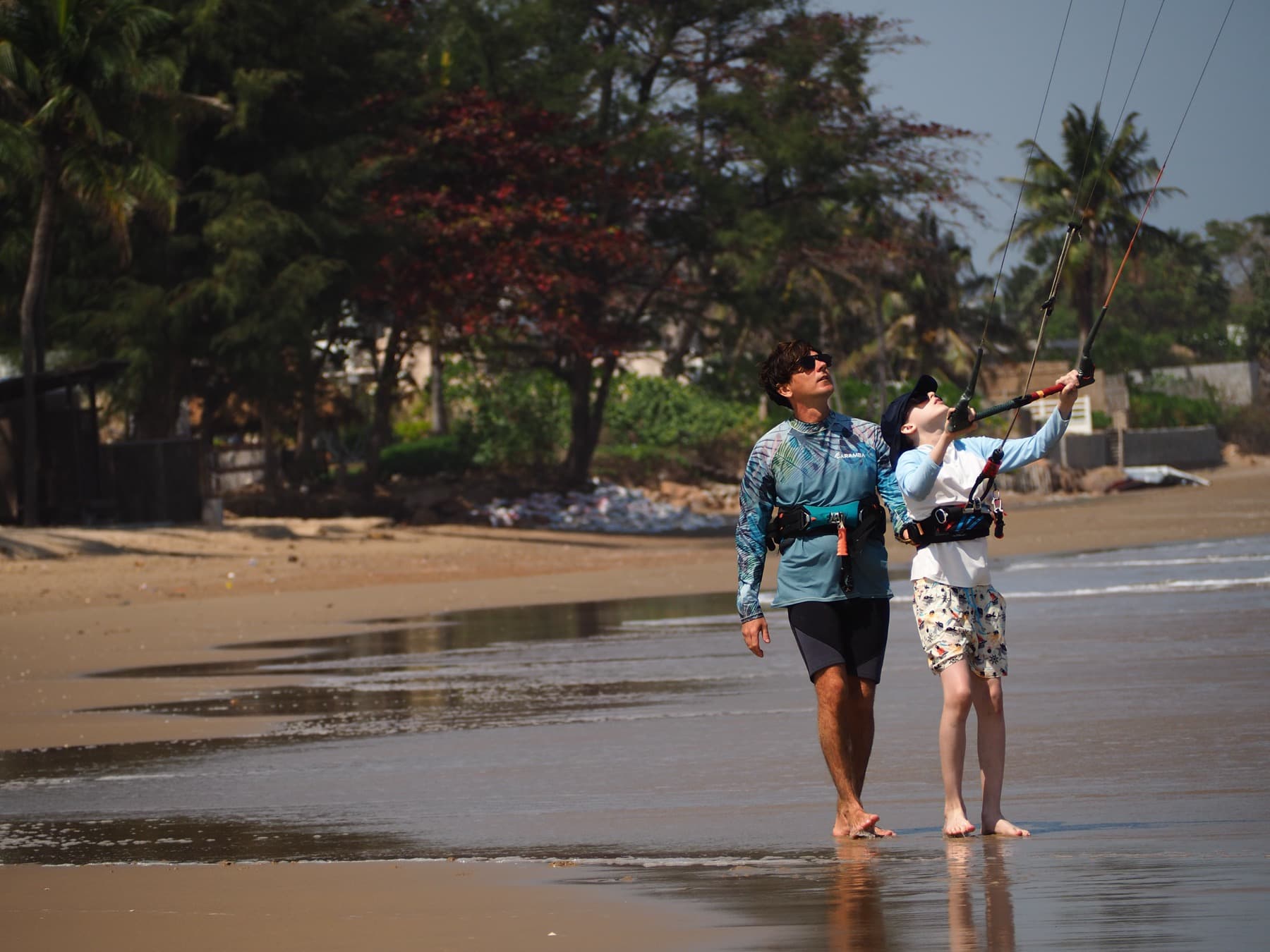
Почему плохо. Кайт — не воздушный змей из детства. Это мощная тяга, которая в силовой зоне сдёргивает человека с места и тащит по воде или берегу. Видео не покажет, что кайт уже зашёл не туда; не подстрахует, когда вы запаниковали; не подберёт размер под ветер. Самые неприятные истории в кайтсёрфинге почти всегда начинаются со слов «решил попробовать сам».Why it's bad. A kite isn't the toy of your childhood. It's a powerful pull that, in the power zone, can yank a person off their feet and drag them across water or shore. A video won't tell you the kite has already drifted into the wrong place; it won't catch you when you panic; it won't match the kite size to the wind. The worst stories in kitesurfing almost always start with "I decided to try it myself."
Как правильно. Начинайте курс с нуля под контролем инструктора. Уже на первом занятии вы разбираете системы безопасности и учитесь сбрасывать тягу — ещё до выхода на воду с доской. Инструктор страхует, видит ошибку раньше вас и ускоряет прогресс: то, что самоучка проходит месяцами и с риском, под присмотром укладывается в несколько дней. Как устроено обучение — в статье «Обучение кайтсёрфингу с нуля».How to do it right. Start a beginner course under an instructor's supervision. On the very first lesson you go over the safety systems and learn to dump the power — before you ever go on the water with a board. The instructor keeps you safe, sees a mistake before you do, and noticeably speeds up your progress: what a self-taught rider grinds through over months and at real risk takes only a few days with supervision. More on how training works is in the article "Learning to kitesurf from scratch".
Ошибка 2. Смотреть на доску, а не на кайтMistake 2. Looking at the board instead of the kite
Почему плохо. Инстинкт тянет смотреть туда, куда едут ноги. Но стоит взгляду упасть на доску, и вы теряете кайт: перестаёте чувствовать, где он в небе, — а он либо падает, либо ныряет в силовую зону и дёргает вас.Why it's bad. Instinctively you want to look where your feet are going. But the moment your eyes drop to the board, you lose control of the kite: you stop feeling where it is in the sky, and the kite "wanders off" — either falling or diving into the power zone and yanking you.
Как правильно. Держите взгляд на кайте и линии горизонта, а доску чувствуйте ногами. Поначалу непривычно: кажется, что без визуального контроля ноги «потеряются». Но связка работает именно так — кайт даёт тягу и направление, ноги доводят. Через несколько проездов мозг перестраивается, и смотреть на кайт становится естественно.How to do it right. Keep your eyes on the kite and the horizon line, and feel the board with your feet. At first this feels odd — it seems your feet will "get lost" without visual control. But this is exactly how the combination works: the kite gives the pull and direction, the feet finish the job. After a few rides your brain rewires and looking at the kite becomes natural.
Ошибка 3. Зажимать планку и «оверщитить»Mistake 3. Gripping the bar and "oversheeting"
Почему плохо. Встревожившись, новичок рефлекторно тянет планку на себя до упора — это и есть оверщит. Логика «подтяну поближе — будет безопаснее» работает наоборот: чем сильнее планка прижата, тем больше угол атаки кайта и тем сильнее тяга. Кайт перегружается, начинает тянуть ещё сильнее или стопорится — и вы теряете контроль ровно в тот момент, когда хотели его вернуть.Why it's bad. When a beginner gets nervous, they reflexively pull the bar all the way in — this is called oversheeting. The logic "pull it closer and I'll be safer" works in reverse here: the harder the bar is pulled in, the greater the kite's angle of attack and the stronger the pull. The kite gets overloaded, starts pulling harder or stalling, and you lose control at exactly the moment you wanted to regain it.
Как правильно. Держите планку ближе к нейтральному положению и дозируйте тягу: подтянули чуть-чуть, когда нужно ускориться, отпустили, когда нужно сбросить. Расслабленные руки контролируют кайт лучше зажатых. Это один из первых навыков, который ставит инструктор, — от него зависит почти всё дальнейшее.How to do it right. Keep the bar closer to neutral and meter the power — pull in a little when you need to speed up, ease out when you need to dump it. Relaxed hands control the kite better than clenched ones. This is one of the first skills an instructor sets, because almost everything that follows depends on it.
Ошибка 4. Неправильный размер кайта или желание «перетянуться»Mistake 4. The wrong kite size, or wanting to be "overpowered"
Почему плохо. Размер кайта подбирают под ваш вес и силу ветра. Слишком большой кайт в сильный ветер — передоз тяги: он тащит, его трудно удержать, любая ошибка усиливается. Слишком маленький в слабый ветер — наоборот: вы не едете и зря тратите сессию. Новички часто хотят кайт побольше, «чтобы точно поехать», — и получают неуправляемую мощь.Why it's bad. Kite size is matched to your weight and the wind strength. A kite that's too big in strong wind is a power overdose: it drags you, it's hard to hold, and any mistake gets amplified. Too small in light wind and you simply don't ride and waste the session. Beginners often want a bigger kite "to make sure I get going" — and end up with unmanageable power.
Как правильно. Подбирайте кайт под текущие условия, а не «на всякий случай побольше». На обучении это делает инструктор: смотрит на ваш вес и на ветер прямо сейчас и выдаёт нужный размер. От этого зависят и безопасность, и скорость прогресса. Когда дойдёт до покупки своего кайта, логику подбора стоит понимать — об этом отдельная статья «Как выбрать кайт».How to do it right. Match the kite to the current conditions, not "bigger just in case." In training the instructor does this: they look at your weight, at the wind right now, and hand you the right size — which directly affects both safety and how fast you progress. When it comes to buying your own kite, it helps to understand the logic of sizing — there's a separate article, "How to choose a kite".
Ошибка 5. Игнорировать ветровое окно и заводить кайт в силовую зонуMistake 5. Ignoring the wind window and steering the kite into the power zone
Почему плохо. Ветровое окно — область неба, где кайт создаёт тягу. У краёв окна и в зените (прямо над головой) тяга минимальна; в центре, ближе к воде, — максимальна, это силовая зона. Новичок, который окно не чувствует, резко проводит кайт через центр и получает мощный рывок, выбивающий из равновесия.Why it's bad. The wind window is the area of sky where the kite generates pull. At the edges of the window and at the zenith (straight overhead) the pull is minimal; in the centre, closer to the water, it's at its maximum — that's the power zone. A beginner who doesn't feel the window steers the kite sharply through the centre and gets a powerful jerk — the kite literally pulls them off balance.
Как правильно. Сначала научитесь видеть окно и понимать, где у кайта спокойные зоны. На старте держите кайт у края окна или в зените, а силовую зону проходите осознанно и плавно — мягкими махами, а не рывком. Это базовый навык первого этапа обучения, без него остальное не строится.How to do it right. First learn to see the window and understand where the kite's "calm" zones are. At the start, keep the kite at the edge of the window or at the zenith, and move it through the power zone deliberately and smoothly, with gentle sweeps rather than a jerk. This is a core skill of the first training stage, and nothing else builds without it.
Ошибка 6. Не отрабатывать квик-релиз и самоспасениеMistake 6. Not practising the quick release and self-rescue
Почему плохо. Система быстрого сброса (квик-релиз) спасает в критический момент — когда кайт потащил, запутались стропы или нужно срочно отцепиться. Но если рука не помнит движение, в стрессе человек замирает и теряет секунды. Самоспасение (как собрать кайт и догрести до берега, если что-то пошло не так) — из той же серии: навык нужен ровно тогда, когда думать уже некогда.Why it's bad. The quick-release system saves you in a critical moment — when the kite drags you, the lines tangle, or you urgently need to detach. But if your hand doesn't remember the move, under stress you freeze and lose precious seconds. Self-rescue (how to pack the kite and paddle back to shore if something goes wrong) is in the same category: a skill you need precisely when there's no time left to think.
Как правильно. Отработайте сброс на берегу до автоматизма, потом повторите на мелкой воде — заранее, на холодную голову. Рука должна находить релиз без раздумий. У нас это обязательная часть первых занятий: безопасность ставим до того, как вы поедете. О реальной картине рисков — в статье «Опасен ли кайтсёрфинг».How to do it right. Drill the release on shore until it's automatic, then repeat it in shallow water — in advance, with a clear head. Your hand should find the release without thinking. With us this is a mandatory part of the first lessons: safety is set before you ride. For a realistic picture of the risks, see the article "Is kitesurfing dangerous".
Ошибка 7. Кататься в неподходящих условиях: оффшор, порывы, толпаMistake 7. Riding in the wrong conditions: offshore, gusts, crowds
Почему плохо. Оффшорный ветер (с берега в море) — одна из главных причин ЧП: если что-то пойдёт не так, вас понесёт от берега и вернуться будет нечем. Порывистый, рваный ветер не даёт стабильной тяги — кайт дёргает непредсказуемо. Старт у самого берега или в толпе райдеров — риск зацепить стропами себя, человека или препятствие.Why it's bad. Offshore wind (blowing from the shore out to sea) is one of the main causes of incidents: if something goes wrong, you get carried away from shore with no way back. Gusty, broken wind gives no steady pull and the kite jerks unpredictably. Starting right by the shore or in a crowd of other riders risks catching yourself, a person, or an obstacle with your lines.
Как правильно. Катайтесь в сайдшор или сайд-оншор (вдоль берега или вдоль с уклоном к берегу), на просторе и на дистанции от людей и предметов. Выбор безопасного места и времени — половина успеха. На обучении эту часть берёт на себя школа: спот Пак Нам Пран как раз и хорош ровным ветром, плоской мелкой водой и простором, где новичку не страшно ошибаться.How to do it right. Ride in sideshore or side-onshore wind (along the shore, or along with a slight lean toward it), with open space and distance from people and objects. Choosing a safe place and time is half the battle. In training the school takes care of this part: the Pak Nam Pran spot is good precisely for its steady wind, flat shallow water and space, where a beginner isn't afraid to make mistakes.
Ошибка 8. Идти пешком за доской вместо бодидрага против ветраMistake 8. Walking after the board instead of upwind body dragging
Почему плохо. Доска уплыла — и новичок инстинктивно идёт за ней по ветру или бредёт пешком вдоль берега. Это сигнал, что не освоен ключевой навык: бодидраг против ветра (движение в воде за счёт кайта, без доски, с набором против ветра). Без него вы будете постоянно терять доску и оказываться ниже по ветру от точки старта — кататься самостоятельно не выйдет.Why it's bad. The board has drifted off, and the beginner instinctively goes after it downwind or wades along the shore on foot. That's a sign a key skill is missing: upwind body drag (moving through the water on the kite, without the board, gaining ground against the wind). Without it you keep losing the board and ending up downwind of your start point — riding independently won't happen.
Как правильно. Освойте бодидраг против ветра до того, как встанете на доску, — это отдельный этап обучения. Он же лежит в основе апвинда (умения идти против ветра уже на доске). Когда вы умеете вернуться к доске и в точку старта телом и кайтом, вы перестаёте зависеть от течения и случая.How to do it right. Master upwind body drag before you get on the board — it's a separate training stage. It's also the foundation of going upwind (riding against the wind once you're on the board). Once you can return to the board and to your start point using your body and the kite, you stop depending on the current and on luck.
Ошибка 9. Откидываться назад или садиться вместо закантовки на водном стартеMistake 9. Leaning back or sitting down instead of edging on the water start
Почему плохо. Первый водный старт — момент, где ошибаются почти все. Кайт даёт импульс, новичок пугается тяги и инстинктивно откидывается назад или «садится» в воду: доска не едет, кайт тащит мимо. Тело сопротивляется ровно тому движению, которое нужно.Why it's bad. The first water start is where almost everyone goes wrong. The kite gives an impulse, the beginner gets scared of the pull and instinctively leans back or "sits down" in the water — and the board won't go, the kite drags them past. The body resists exactly the movement that's needed.
Как правильно. Дайте кайту поднять вас из воды, поставьте доску на кант (закантуйтесь) и смотрите вперёд, по ходу движения. Не тяните на себя и не приседайте — доверьтесь тяге и позвольте доске встать на ребро. Навык ставится за несколько повторений под подсказку инструктора по радиосвязи, и «щелчок» приходит почти у всех за одну-две сессии.How to do it right. Let the kite lift you out of the water, set the board on its edge (engage the edge) and direct your gaze forward, in the direction of travel. Don't pull in or crouch — trust the pull and let the board come up onto its rail. This is set over a few repetitions with the instructor coaching over radio, and the "click" comes for nearly everyone within a session or two.
Ошибка 10. Покупать своё снаряжение слишком раноMistake 10. Buying your own gear too early
Почему плохо. Заманчиво купить красивый комплект ещё до первых проездов. Но пока вы не знаете своего стиля и условий, в которых катаетесь, выбор будет наугад. В итоге деньги уходят на ветер: кайт не того размера, доска не под ваш уровень — и всё это придётся перепродавать.Why it's bad. It's tempting to buy a nice set before your first rides. But until you understand your weight-style-conditions and know what wind you ride in, the choice will almost certainly be a guess. The money ends up "thrown to the wind": the wrong kite size, a board not suited to your level, and all of it to be resold later.
Как правильно. Учитесь на школьном снаряжении: его подбирают под вас на каждом занятии. Своё покупайте позже и осознанно, когда уже понимаете, что вам подходит. К этому моменту полезно прочитать «Как выбрать кайт» — там логика подбора без маркетинга.How to do it right. Learn on the school's gear — it's matched to you at every lesson. Buy your own deliberately and later, once you understand what suits you and the conditions you ride in. By then it's worth reading "How to choose a kite" — it breaks down the logic of choosing without the marketing.
Ошибка 11. Спешка и перепрыгивание этаповMistake 11. Rushing and skipping stages
Почему плохо. Самая частая ошибка прогресса — рваться к прыжкам, минуя базу. Без уверенного апвинда, контроля кайта и чистого старта прыжок почти гарантированно заканчивается жёстким приземлением, откатом назад или травмой. Пропущенный этап не исчезает — он всплывает позже и тормозит сильнее, чем если бы вы прошли его по порядку.Why it's bad. The most common "progress mistake" is wanting to jump straight to jumps, skipping the base. Without confident upwind riding, kite control and a clean start, a jump almost guarantees a hard landing, a setback, or injury. A skipped stage doesn't disappear — it resurfaces later and slows you down more than if you'd gone through it in order.
Как правильно. Идите этап за этапом: управление кайтом → бодидраг → водный старт → апвинд → и только потом прыжки и трюки. Каждый следующий навык опирается на предыдущий и потому ложится прочно. Когда база готова, прыжки приходят быстро и безопасно. Хочется именно трюков — это к нам в «Школу трюков JollyKite», но сначала база.How to do it right. Go stage by stage: kite control → body drag → water start → upwind → and only then jumps and tricks. Each next skill builds on the previous one, so it's laid down solidly. Once the base is ready, jumps come quickly and safely. If it's tricks you're after — that's us at the "JollyKite Tricks School", but the base comes first.
Главный выводThe bottom line
Безопасный и быстрый прогресс держится на трёх вещах:If you boil it all down to three points, safe and fast progress rests on a simple foundation:
- Инструктор. Страхует, видит ошибку раньше вас, подбирает кайт и ставит безопасность с первого занятия. Большинство опасных ошибок просто не случаются, когда рядом тот, кто их предвидит.An instructor. They keep you safe, see a mistake before you do, match the kite, and set safety from the very first lesson. Most dangerous mistakes simply don't happen when someone who anticipates them is beside you.
- База по порядку. Управление кайтом, бодидраг, старт, апвинд — без пропусков. Честно пройденные этапы экономят недели и берегут от откатов.The base, in order. Kite control, body drag, water start, upwind — no skips. Stages done honestly save weeks and protect you from setbacks.
- Правильные условия. Подходящий ветер (сайд или сайд-оншор, без оффшора и рваных порывов), простор, плоская мелкая вода и дистанция от людей. Место решает не меньше техники.The right conditions. Suitable wind (side or side-onshore, no offshore and no ragged gusts), space, flat shallow water and distance from people. The place matters as much as the technique.
Ошибки — нормальная часть пути, а не повод переживать. Задача не в том, чтобы не ошибаться вообще, а в том, чтобы знать опасные ошибки заранее и проходить остальные под присмотром. Тогда обучение идёт спокойно, безопасно и заметно быстрее.Mistakes are a normal part of the journey, not a reason to worry. The point isn't to "never make mistakes" but to know the dangerous ones in advance and work through the rest under supervision. Then learning goes calmly, safely and noticeably faster.
Поедем кататься?Let's go riding?
Напишите нам даты и уровень — подскажем формат, поможем обойти типичные ошибки новичка и посчитаем поездку под ключ. Запись и форматы — на странице /obuchenie. WhatsApp +66 98 367 9769, Telegram-бот @JollyKite_kite_bot.Send us your dates and level — we'll suggest a format, help you sidestep the typical beginner mistakes and plan your trip end to end. Booking and formats are on the /obuchenie page. WhatsApp +66 98 367 9769, Telegram bot @JollyKite_kite_bot.
Частые вопросыFAQ
Какие ошибки чаще всего совершают новички в кайтсёрфинге?What mistakes do beginners make most often in kitesurfing?+
Самые частые — смотреть на доску вместо кайта, зажимать планку и «оверщитить», не чувствовать ветровое окно, кататься в неподходящих условиях (оффшор, порывы, толпа) и спешить к прыжкам без базы. Почти все они либо тормозят прогресс, либо опасны — но если знать их заранее, большинство легко обойти.The most common ones are looking at the board instead of the kite, gripping the bar and oversheeting, not feeling the wind window, riding in the wrong conditions (offshore, gusts, crowds), and rushing to jumps without a base. Almost all of them either slow your progress or are dangerous — but if you know them in advance, most are easy to sidestep.
Можно ли научиться кайтсёрфингу без инструктора, по видео?Can you learn kitesurfing without an instructor, from videos?+
Не стоит. Кайт создаёт мощную тягу, и ошибка в неподходящих условиях может закончиться травмой. Видео не подстрахует, не подберёт размер кайта под ветер и не увидит ошибку раньше вас. С инструктором вы с первого занятия осваиваете системы безопасности и прогрессируете в разы быстрее и безопаснее.You shouldn't. A kite generates a powerful pull, and a mistake in the wrong conditions can end in injury. A video won't keep you safe, won't match the kite size to the wind, and won't see a mistake before you do. With an instructor you master the safety systems from the first lesson and progress far faster and more safely.
Почему так важен правильный размер кайта?Why does the right kite size matter so much?+
Размер подбирается под ваш вес и силу ветра. Слишком большой кайт в сильный ветер — это передоз тяги и потеря контроля, слишком маленький в слабый — вы просто не едете. На обучении размер подбирает инструктор под текущие условия, и это напрямую влияет и на безопасность, и на скорость прогресса.Size is matched to your weight and the wind strength. A kite that's too big in strong wind means a power overdose and loss of control; too small in light wind and you simply don't ride. In training the instructor selects the size for the current conditions, and this directly affects both safety and how fast you progress.
Когда покупать собственное снаряжение?When should I buy my own gear?+
Не раньше, чем вы начнёте понимать свой стиль и условия, в которых катаетесь. До этого выбор будет наугад, и деньги уйдут впустую. Учитесь на школьном комплекте, который подбирается под вас, а своё покупайте осознанно и позже — логику подбора стоит изучить заранее.Not before you start to understand your style and the conditions you ride in. Before that the choice is a guess, and the money is wasted. Learn on the school's set, which is matched to you, and buy your own deliberately and later — it's worth studying the logic of choosing in advance.
Почему нельзя сразу переходить к прыжкам?Why can't I go straight to jumps?+
Без уверенной базы — контроля кайта, чистого старта и апвинда — прыжок почти наверняка закончится жёстким приземлением, откатом или травмой. Пропущенный этап всплывает позже и тормозит сильнее. Идите по порядку: когда база готова, прыжки приходят быстро и безопасно.Without a confident base — kite control, a clean start and upwind riding — a jump almost certainly ends in a hard landing, a setback, or injury. A skipped stage resurfaces later and slows you down more. Go in order: once the base is ready, jumps come quickly and safely.
Поедем кататься?Shall we go riding?
Напишите даты и уровень — посчитаем поездку под ключ и подберём формат.Tell us your dates and level — we’ll plan the whole trip.