
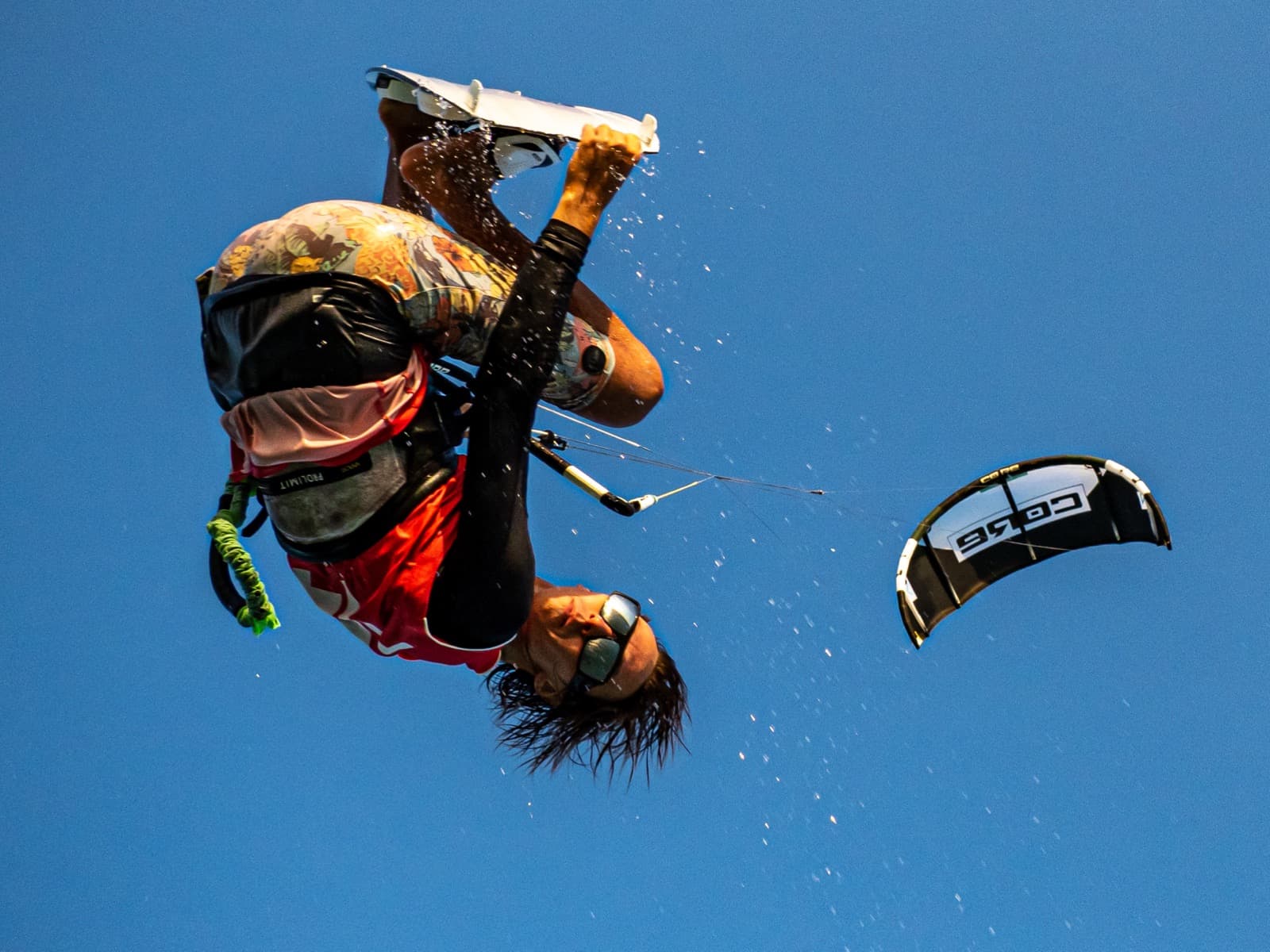
Поп (pop) в кайтсёрфинге: отрыв за счёт кантаPop in kitesurfing: getting airborne off the edge
Поп (от англ. *pop* — «щелчок», «выстрел») — это резкий, низкий и взрывной отрыв от воды за счёт энергии закантованной доски, без подъёма кайта вверх. И дорогу во фристайл открывает именно он — поп. А вовсе не высокий прыжок с посылом кайта в зенит.The pop is a sharp, low and explosive takeoff powered by the energy of an edged board, without lifting the kite up. The first tool that leads into freestyle isn't a big jump with the kite sent to the zenith — it's this.
2 июля 20262 July 2026 · JollyKite
Что такое поп и чем он отличается от прыжкаWhat pop is and how it differs from a jump
Поп — это отрыв от воды за счёт загрузки доски и канта против тяги кайта, без высокого «парашютного» посыла кайта вверх. Вы сильно закантовываетесь, накапливаете в доске энергию, как в сжатой пружине, и резко её отпускаете — доска выбрасывает вас вверх. Отрыв получается резким, низким и взрывным, буквально «щелчком».Pop is leaving the water through loading the board and the edge against the kite's pull, without a high "parachute" send of the kite upward. You edge hard, store energy in the board like in a compressed spring, and release it sharply — the board throws you up. The takeoff is sharp, low and explosive, literally a "snap."
Чтобы понять поп, проще всего сравнить его с обычным прыжком:The easiest way to understand pop is to compare it with a regular jump:
- В обычном прыжке высоту даёт кайт. Вы посылаете кайт в зенит (к 12 часам), он подхватывает вас и поднимает — высота берётся из движения кайта вверх. Отрыв плавный, «парашютный», вы как бы повисаете под кайтом.In a regular jump the kite gives you height. You send the kite to the zenith (to 12 o'clock), it catches you and lifts you — the height comes from the kite's upward movement. The takeoff is smooth and "parachute-like"; you hang under the kite.
- В попе высоту даёт кант. Кайт при этом держат низко и почти не двигают. Вся энергия отрыва — из закантованной, нагруженной доски, которую вы в нужный момент разгружаете. Отрыв резкий и низкий, кайт остаётся у края окна.In a pop the edge gives you height. The kite is kept low and barely moved. All the takeoff energy comes from the edged, loaded board, which you unload at the right moment. The takeoff is sharp and low, and the kite stays at the edge of the window.
Разница принципиальная. Прыжок учит работать кайтом, поп — кантом и доской. На попе держится весь фристайл: почти все трюки строятся на низком взрывном отрыве, когда кайт не работает «подъёмным краном», а руки и тело свободны для трюка.This difference is fundamental. A jump teaches you to work the kite; a pop teaches you to work the edge and the board. Pop is exactly what freestyle is built on: almost every trick relies on a low explosive takeoff, where the kite isn't used as a "crane" and your hands and body are free for the trick.
Что нужно уметь до попаWhat you need to know before the pop
Поп — не первый навык на воде. Предусловия простые, но без них чистый поп не получится:Pop isn't the first skill on the water, and it makes sense to approach it only on a certain base. The prerequisites are simple, but without them a clean pop won't happen:
- Уверенно идти против ветра. Если вас ещё сваливает вниз по ветру, стабильную закантовку под нагрузкой вы не удержите, а она — основа попа.Go upwind confidently. If you still slip downwind, you won't be able to hold a steady edge under load — and that edge is the basis of the pop.
- Держать стабильную закантовку. Давить на кант нужно долго и ровно, не срываясь и не теряя равновесие. Поп — это управляемая загрузка того самого канта.Hold a stable edge. You should be able to press on the edge for a long time, evenly, without slipping or losing balance. A pop is the controlled loading of that very edge.
- Контролировать кайт одной позицией. Для попа кайт фиксируют невысоко и почти не трогают. Если кайт пока «гуляет» и вы постоянно его подруливаете — сначала наберите уверенности в ровном полёте.Control the kite with a single position. For a pop the kite needs to be locked low and barely touched. If the kite still "wanders" and you're constantly steering it, build confidence in steady flight first.
Если всё это даётся легко и не требует внимания — пробуйте поп. Если нет, докатайте базу: эти навыки мы ставим на занятиях, и пропускать их ради трюков не стоит.If these things already come easily and don't require attention, you're ready to try the pop. If not, calmly finish off the base: we teach each of these skills in lessons, and there's no point skipping them for the sake of tricks.
Поп по шагамPop step by step
Разберём чистый хукед-поп (в крюке). Делайте его на плоской воде и комфортном ровном ветре — так доска лучше держит кант, а отрыв получается предсказуемым.Let's break down a clean hooked pop step by step. Do it on flat water and comfortable, steady wind — that way the board holds the edge better and the takeoff is predictable.
- Разгонитесь и зафиксируйте кайт невысоко. Наберите комфортную скорость и поставьте кайт у края окна — примерно на «1 час» (или «11 часов», если едете в другую сторону), не в зените. Дальше кайт не двигаем: он просто держит ровную тягу.Build speed while riding and lock the kite low. Reach a comfortable speed and set the kite at the edge of the window — at about "1 o'clock" (or "11 o'clock" if you're going the other way), not at the zenith. From here, don't move the kite: it holds steady pull, and that's it.
- Сильно закантуйтесь против ветра. Давите на заднюю, пяточную часть канта, корпус откиньте назад-вниз, нагрузите доску всем весом. Вы как будто упираетесь в тягу кайта и едете, вгрызаясь в воду, — в доске копится энергия, как в сжатой пружине.Edge hard against the wind. Press on the back, heel-side part of the edge, lean your body back and down, load the board with your whole weight. It's as if you brace against the kite's pull and ride "biting" into the water — energy builds up in the board like in a compressed spring.
- В момент максимальной загрузки резко отпустите кант. Разогните ноги и уберите давление — доска, освободившись от нагрузки, выбрасывает вас вверх. Это и есть «щелчок». Поймайте пик: отпускать нужно тогда, когда кант нагружен максимально.At the moment of maximum load, release the edge sharply. Straighten your legs and remove the pressure — the board, freed from the load, springs you up like a spring. That's the "snap." It's important to catch the peak of the load: release exactly when the edge is loaded to the maximum.
- Подтяните колени и держите планку ближе. В воздухе подтяните ноги к себе, планку держите ближе к корпусу. Кайт всё это время не дёргайте — он остаётся там же, где был. Высоту вам дала доска, а не кайт.Pull your knees up and keep the bar close. In the air, pull your legs toward you and keep the bar close to your body. All this time, don't yank the kite — it stays where it was. The board, not the kite, has already given you the height.
- Приземляйтесь носом чуть по ветру, на согнутые ноги. Направьте нос доски немного по ветру, встречайте воду на мягких согнутых ногах и плавно поставьте кант. Мягкое приземление гасит удар и сразу возвращает вас в движение.Land nose slightly downwind, on bent legs. Point the board's nose a little downwind, meet the water on soft, bent legs and set the edge gently. A soft landing absorbs the impact and immediately returns you to riding.
Поначалу отрыв будет совсем небольшим — это нормально. В первых попытках высота не важна: ловите правильное ощущение — загрузил кант, отпустил, щёлкнул вверх. Высота придёт сама, когда движение станет чистым.At first the takeoff will be quite small — that's normal. The goal of the first attempts isn't height but the right feeling: load the edge — release it — "snap" up. Height comes on its own once the movement becomes clean.
Хукед и анхукедHooked and unhooked
Поп осваивают в два этапа, и первый пропускать нельзя.Pop is learned in two stages, and it's important not to skip the first.
- Хукед-поп (в крюке). Сначала поп делают, не отстёгивая планку от крюка трапеции. Тягу кайта держит трапеция, а вы спокойно занимаетесь главным — загрузкой и разгрузкой канта. Так безопаснее и понятнее, и с хукед-попа начинают все.Hooked pop. First you do the pop without unhooking the bar from the harness hook. The harness holds the kite's pull, and you calmly focus on the main thing — loading and unloading the edge. It's safer and clearer, and everyone starts with the hooked pop.
- Анхукед-поп (отстёгнутый). Когда хукед-поп стабилен, планку снимают с крюка, и всю тягу кайта вы держите руками. Анхукед — вход в настоящий фристайл: большинство трюков делают именно с отстёгнутым крюком. Но нагрузка на руки и цена ошибки здесь выше, поэтому отстёгиваться стоит только после уверенного хукед-попа и обязательно под присмотром инструктора.Unhooked pop. Once the hooked pop is stable, you move to the unhooked version: the bar comes off the hook, and you hold all the kite's pull with your hands. Unhooked is already the entry into real freestyle, because most tricks are done exactly with the loop unhooked. But both the load on your arms and the cost of a mistake are higher here, so unhooking makes sense only after a confident hooked pop and always under an instructor's supervision.
Не торопитесь отстёгиваться. Чистый, повторяемый хукед-поп — это уже половина фристайла и та база, на которой потом всё держится.Don't rush to unhook. A clean, repeatable hooked pop is already half of freestyle, and it's exactly what gives you the base everything else rests on later.
Частые ошибкиCommon mistakes
Почти все проблемы с попом сводятся к пяти ошибкам. Зная их заранее, вы быстрее почувствуете правильный отрыв:Most pop problems come down to a few typical mistakes. Knowing them in advance, you'll feel the right takeoff faster:
- Посылают кайт вместо загрузки канта. Самая частая ошибка: вместо того чтобы нагрузить кант, человек по привычке посылает кайт вверх. Получается обычный прыжок, а не поп. Помните: в попе кайт стоит низко и неподвижно, высоту даёт доска.Sending the kite instead of loading the edge. The most common mistake: instead of loading the edge, you send the kite up out of habit. You get a regular jump, not a pop. Remember: in a pop the kite stays low and still, the board gives the height.
- Слабо закантовываются. Если кант нагружен слабо, энергия в доске не накопится — и отпускать будет нечего. Без сильной, уверенной закантовки попа не выйдет.Edging weakly. If the edge is loaded weakly, no energy builds up in the board — and there's nothing to release. Without a strong, confident edge there's no pop.
- Разгибают ноги слишком рано или слишком поздно. Отпускать кант нужно ровно на пике загрузки. Рано — доска ещё не зарядилась; поздно — энергия уже ушла. Это вопрос тайминга, а тайминг ставится повторением.Straightening the legs too early or too late. You need to release the edge exactly at the peak of the load. Too early — the board hasn't "charged" yet; too late — the energy is already gone. It's a matter of timing, and it's built by repetition.
- Смотрят на доску. Опущенный взгляд сбивает баланс и закантовку. Смотрите вперёд и чуть выше по ветру, а не себе под ноги.Looking at the board. A dropped gaze throws off your balance and edge. Look ahead and slightly upwind, not down at your feet.
- Зажимаются. Скованное тело плохо загружает кант и не даёт чистой разгрузки. Чем спокойнее корпус, тем чище «щелчок».Tensing up. A stiff, tense body loads the edge poorly and doesn't give a clean release. The calmer and more composed your body, the cleaner the "snap."
Что дальшеWhat's next
Стабильный поп в обе стороны открывает весь фристайл. С него начинаются грэбы (захваты доски в воздухе), первые вращения и отстёгнутые трюки. Логичный следующий шаг — добавить к попу захват доски: подробно об этом в материале грэбы на кайте. А чтобы увидеть всю карту трюков и понять, что осваивать в каком порядке, загляните в Школу трюков JollyKite.Once the pop is stable and repeatable both ways, all of freestyle opens up to you. Grabs (grabbing the board in the air), your first rotations and unhooked tricks all start from a confident pop. The logical next step is to add a board grab to the pop: we cover this in detail in the article grabs on the kite. And to see the whole trick map and understand what to learn in what order, look into the JollyKite Trick School.
Если поп не идёт, чаще всего не хватает базы прыжка — умения работать кайтом и спокойно отрываться от воды. Тогда вернитесь к материалу первый прыжок на кайте, докатайте его — и только потом беритесь за поп.If the pop is still hard, you may be missing the jump base — the ability to work the kite and calmly leave the water. In that case it makes sense to go back to the article your first jump on the kite and finish it off, and only then move on to the pop.
Все эти навыки мы ставим под контролем инструктора, с радиосвязью на воде и в безопасной плоской воде Пак Нам Прана — это резко снижает риски при освоении трюков. Подробнее о форматах и записи — на странице /obuchenie.We teach all these skills under an instructor's supervision, with radio comms on the water and in the safe, flat water of Pak Nam Pran — which sharply lowers the risks while learning tricks. More on formats and booking is on the /obuchenie page.
Поедем кататься?Let's go riding?
Напишите нам даты и уровень — подскажем формат, подберём сезон под ваш ритм и посчитаем поездку под ключ. WhatsApp +66 98 367 9769, Telegram-бот @JollyKite_kite_bot.Send us your dates and level — we'll suggest a format, match the season to your rhythm and plan your trip end to end. WhatsApp +66 98 367 9769, Telegram bot @JollyKite_kite_bot.
Частые вопросыFAQ
Что такое поп (pop) в кайтсёрфинге?What is pop in kitesurfing?+
Поп — это резкий, низкий и взрывной отрыв от воды за счёт загрузки доски и канта против тяги кайта, без высокого посыла кайта вверх. Вы сильно закантовываетесь, накапливаете в доске энергию, как в пружине, и резко её отпускаете — доска выбрасывает вас вверх «щелчком». Поп — база всего фристайла и анхукед-катания.Pop is a sharp, low and explosive takeoff from the water through loading the board and the edge against the kite's pull, without a high send of the kite upward. You edge hard, store energy in the board like in a spring, and release it sharply — the board throws you up with a "snap." Pop is the base of all freestyle and unhooked riding.
Чем поп отличается от обычного прыжка?How does pop differ from a regular jump?+
В обычном прыжке высоту даёт кайт: вы посылаете его в зенит, и он поднимает вас вверх. В попе высоту даёт кант: кайт держат низко и почти не двигают, а весь импульс берётся из закантованной, нагруженной доски, которую вы вовремя разгружаете. Прыжок учит работать кайтом, поп — кантом и доской.In a regular jump the kite gives you height: you send it to the zenith and it lifts you up. In a pop the edge gives you height: the kite is kept low and barely moved, and the whole impulse comes from the edged, loaded board that you unload at the right time. A jump teaches you to work the kite, a pop to work the edge and the board.
Что нужно уметь до попа?What do you need to know before the pop?+
Перед попом нужно уверенно идти против ветра, держать стабильную закантовку под нагрузкой и контролировать кайт одной позицией, не подруливая его постоянно. На этой базе строится управляемая загрузка и разгрузка канта. Без неё чистый поп не получится.Before the pop you need to go upwind confidently, hold a stable edge under load, and control the kite with a single position without constantly steering it. The controlled loading and unloading of the edge is built on this base. Without it a clean pop won't happen.
Нужно ли отстёгиваться, чтобы сделать поп?Do you need to unhook to do a pop?+
Нет, начинают всегда с хукед-попа — в крюке, не отстёгивая планку от трапеции. Так тягу держит трапеция, а вы сосредотачиваетесь на загрузке канта. Отстёгнутый (анхукед) поп осваивают позже, когда хукед-вариант уже стабильный, — это вход в настоящий фристайл и обязательно под присмотром инструктора.No, you always start with a hooked pop — on the hook, without unhooking the bar from the harness. The harness holds the pull while you focus on loading the edge. The unhooked pop is learned later, once the hooked version is stable — it's the entry into real freestyle and always under an instructor's supervision.
Опасно ли учить поп?Is it dangerous to learn the pop?+
Поп требует базы и аккуратности, но при правильном подходе осваивается безопасно. Его учат на плоской воде и комфортном ровном ветре, сначала в крюке, под контролем инструктора и с радиосвязью на воде. Такой формат резко снижает риски и помогает быстрее почувствовать правильный отрыв.Pop requires a base and care, but with the right approach it's learned safely. It's taught on flat water and comfortable, steady wind, first on the hook, under an instructor's supervision and with radio comms on the water. This format sharply lowers the risks and helps you feel the right takeoff faster.
Поедем кататься?Shall we go riding?
Напишите даты и уровень — посчитаем поездку под ключ и подберём формат.Tell us your dates and level — we’ll plan the whole trip.